
-
-
Our international network, passionate team of experts and extensive industry knowledge is what sets us apart.
























Search
Close
Search


OVERVIEW
Kinexa is a clinically studied, whole-joint solution that preserves joint structure, builds functional strength and supports the entire joint as a system.

5
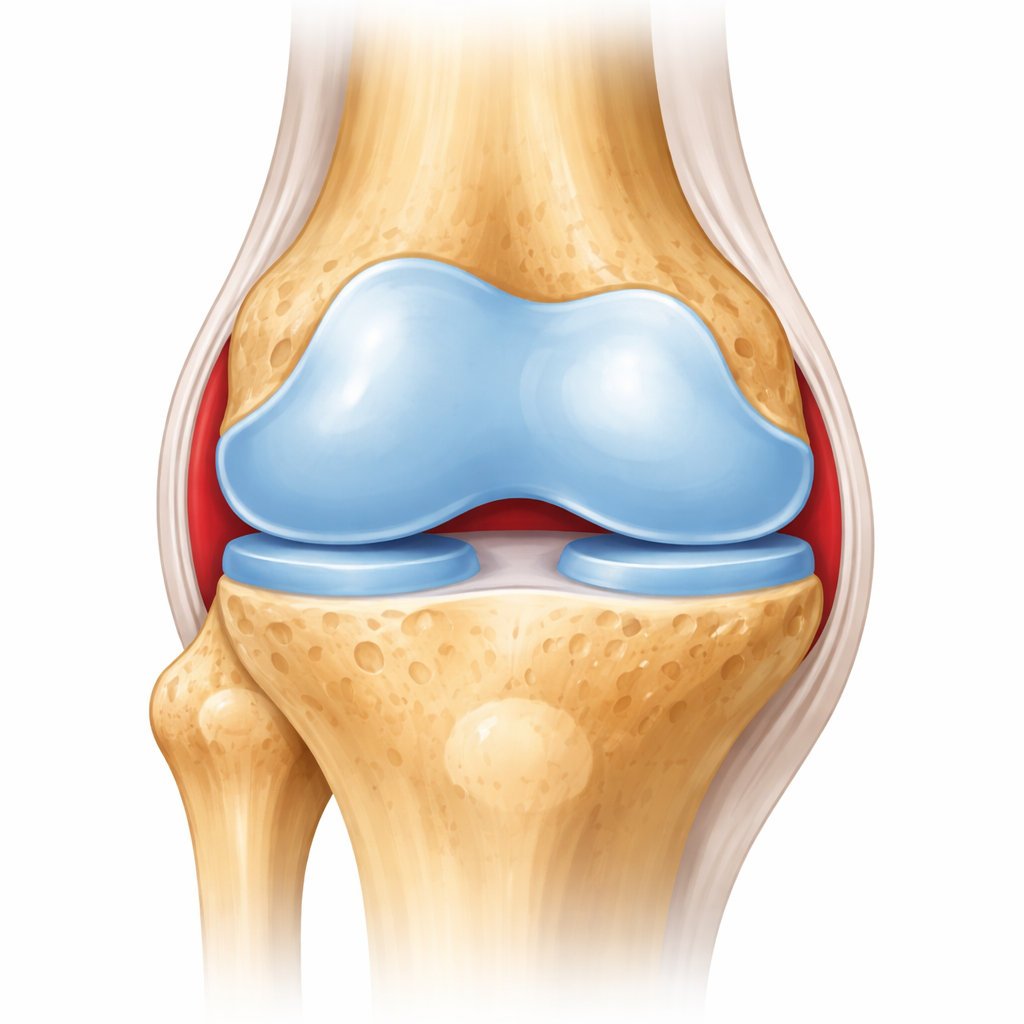
Key joint structures affected

24%
Improvement in knee strength*
10%
Improvement in cartilage thickness*

>49%
Improvement in joint comfort, function, and stiffness*

CERTIFICATIONS

VEGAN

GLUTEN-FREE

NON-GMO

SOLVENT-FREE
Haritaki (Terminalia chebula)
A revered Ayurvedic herb known as the "King of Medicines"

Tumeric (Curcuma longa)
A member of the ginger family, primarily known a a key ingredient in curry powder.


Kinexa improved knee strength by 24%*
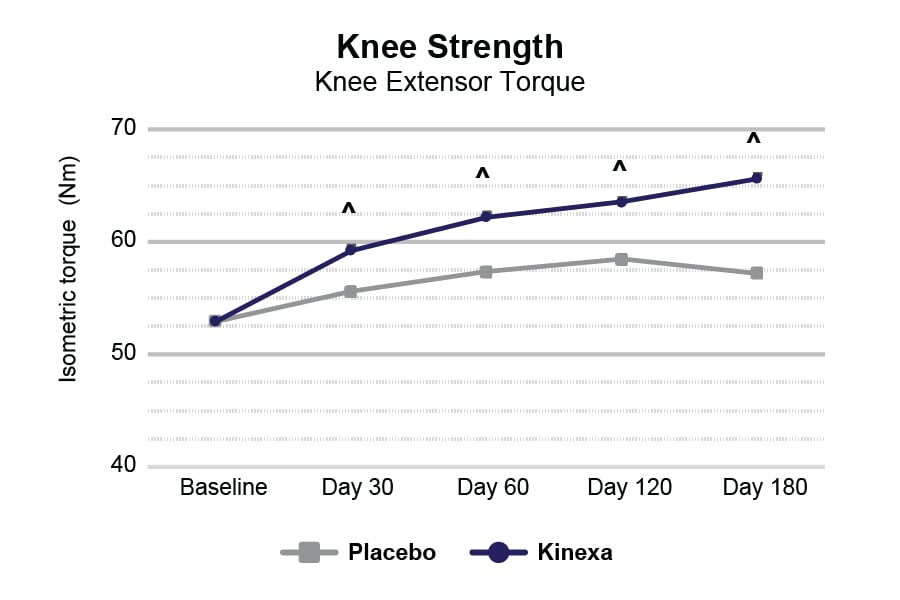
Kinexa significantly improved average Knee Extensor Torque across the 3 angles assessed (30°, 60°, 90°) vs. baseline and placebo at Days 30, 60, 120 and 180.
*Knee joint torque improved 24% relative to baseline in the Kinexa cohort over the 6-month study.
Kinexa improved cartilage thickness by 10%*
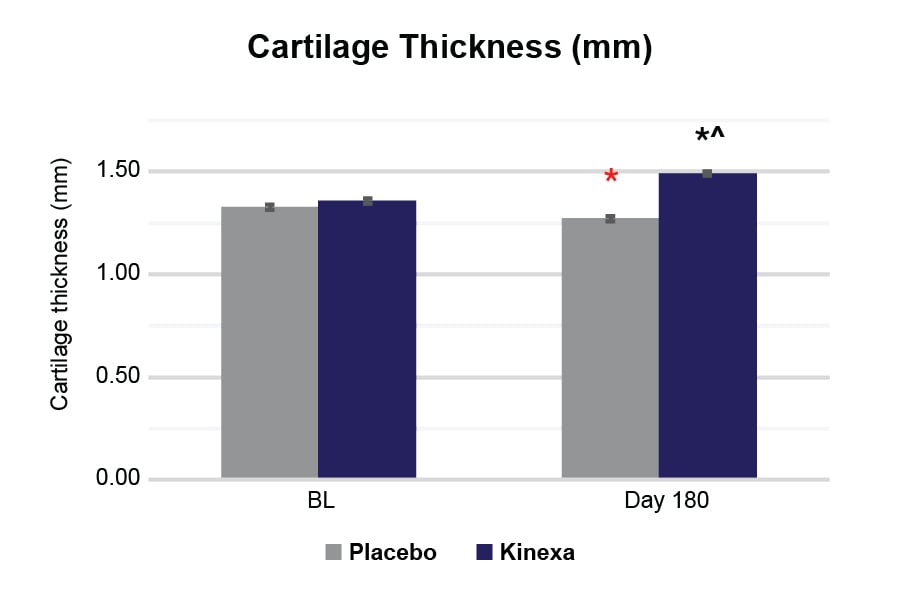
Cartilage thickness, assessed by MRI, was significantly improved vs baseline and vs placebo in the Kinexa group, while in the placebo group, cartilage thickness significantly declined over the 6-month study.
*Cartilage thickness improved 10% relative to baseline in the Kinexa.
Kinexa significantly improved cartilage volume
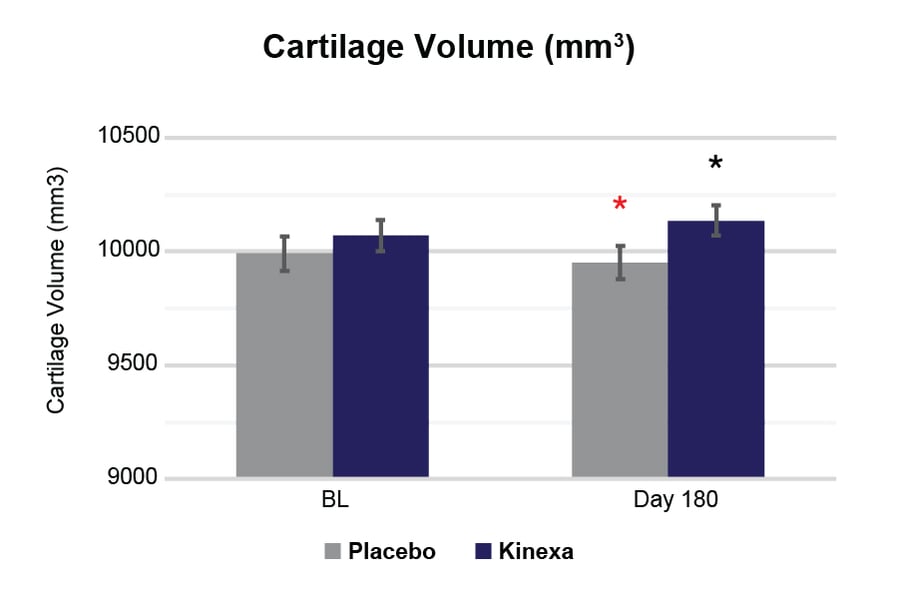
Cartilage volume, assessed by MRI, significantly improved vs baseline in the Kinexa group, while in the placebo group, cartilage volume significantly declined versus baseline over the 6-month study.
Kinexa improved cartilage glycosaminoglycan concentration by 4%*
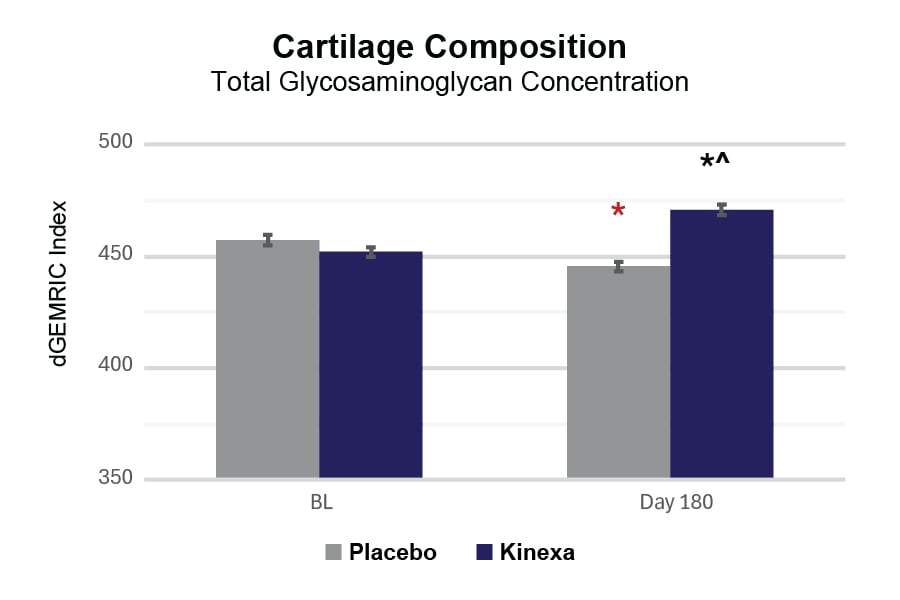
Cartilage composition, evaluated as glycosaminoglycan concentration via dGEMRIC-enhanced MRI, was significantly improved vs baseline and vs placebo in the Kinexa group. In the placebo group, the concentration of glycosaminoglycans in cartilage significantly declined over the 6-month study.
*Glycosaminoglycan concentration of cartilage improved 4% relative to baseline in the Kinexa group.
Kinexa significantly improved the health of the foundational bone in the joint
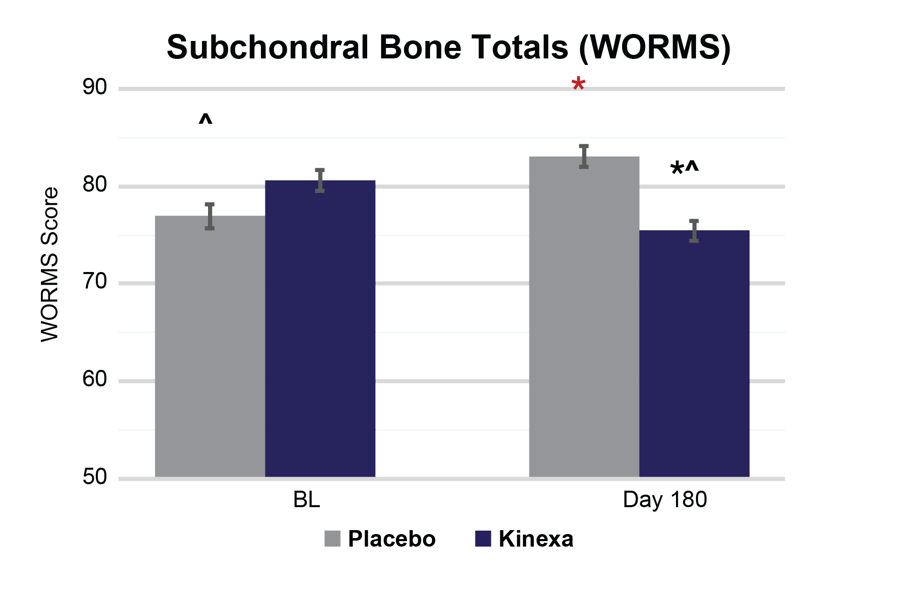
Subchondral Bone WORMS Composite Scores improved significantly versus baseline and placebo for the Kinexa group, while the placebo declined significantly over the 6-month study.
WORMS Subchondral Bone Composite Score is comprised of bone lesion, cysts, osteophyte and attrition scores.
Kinexa improved physical performance by 33%*
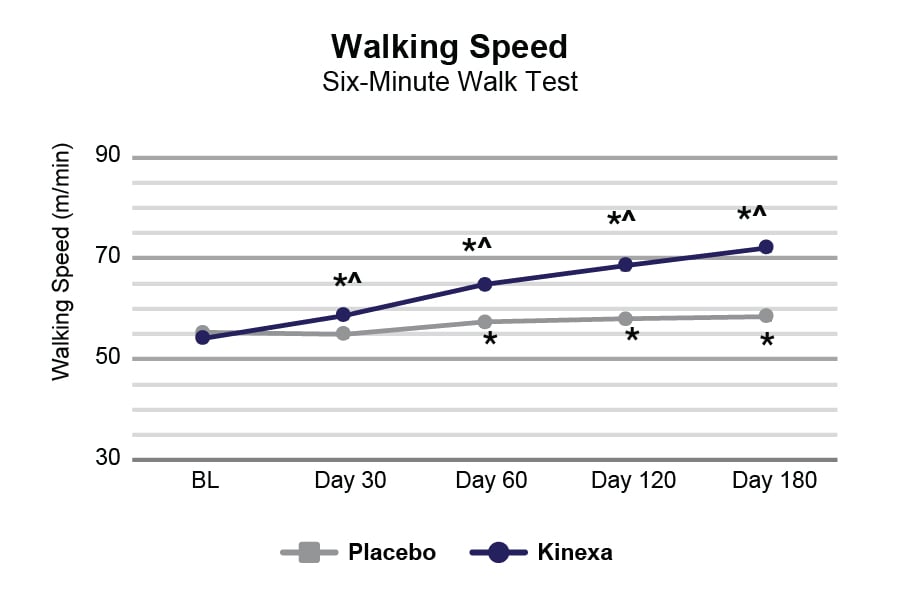
Kinexa significantly improved average walking speed in the Six-Minute Walk Test versus baseline and placebo at Days 30, 60, 120, and 180.
*Walking Speed improved 33% relative to baseline in the Kinexa group over the 6-month study.
Kinexa significantly improved the health of ligaments and menisci
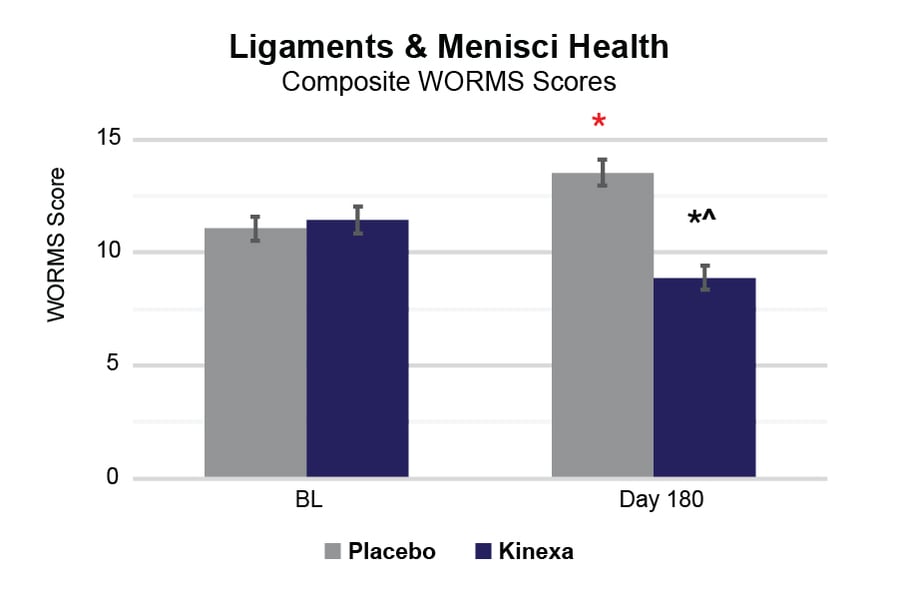
Ligament & Menisci WORMS Composite Score improved significantly versus baseline and placebo for the Kinexa group, while the placebo scores declined significantly over the 6-month study.
WORMS Ligament & Menisci Composite Score is comprised of anterior/posterior cruciate and medial/lateral collateral ligaments.
Kinexa improved overall joint comfort, stiffness and function by 56%*
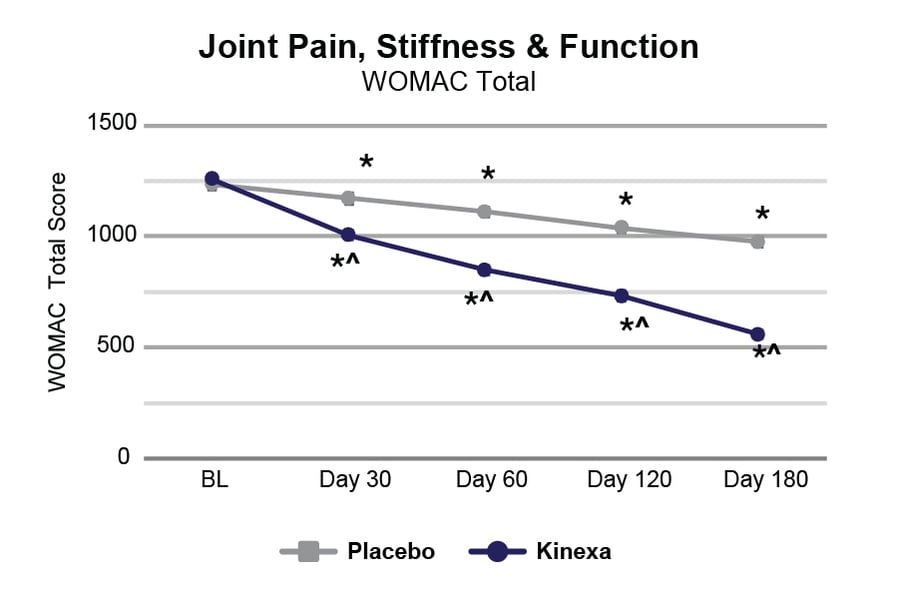
Kinexa significantly improved Total WOMAC versus baseline and placebo at Days 30, 60, 120, and 180.
All WOMAC Subsets (Pain, Stiffness and Function) were also significantly improved with Kinexa versus baseline and placebo at Days 30, 60, 120 and 180.
*Total WOMAC improved 56% relative to baseline in the Kinexa group over the 6-month study.
Kinexa significantly improved synovial health
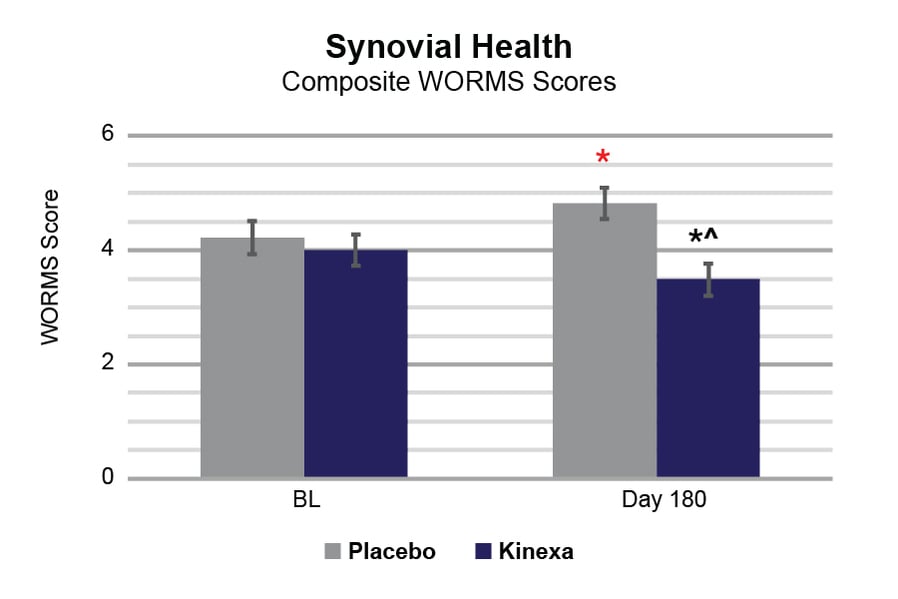
Synovial Health WORMS Composite Scores improved significantly versus baseline and placebo for the Kinexa group, while the placebo scores declined significantly over the 6-month study.
WORMS Synovial Health Composite Score includes synovitis, effusion, periarticular cysts and loose bodies.
Clinical Study: Kinexa and 5 Key Joint Structures
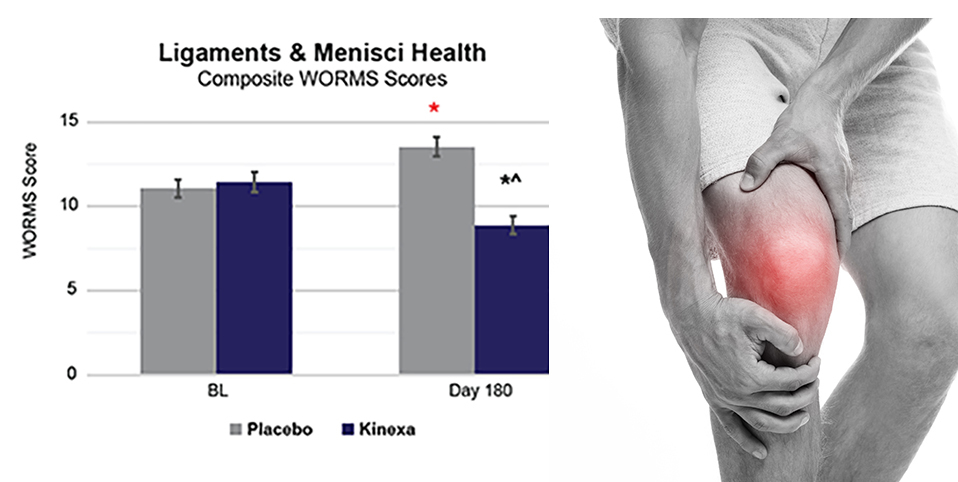
Over a six-month study, Kinexa was shown to preserve and improve five key joint structures: Cartilage, Menisci, Ligaments, Synovium, and Subchondral bone*
MARKET OPPORTUNITIES

Bone, Joint & Muscle Health
Kinexa opens up a new segment of the joint health category: whole joint health. It goes beyond managing symptoms toward a new understanding of bone and joint health, addressing a much broader range of factors that contribute to joint health and mobility.

Healthy Aging
When cartilage, meniscus, ligaments, and the foundation beneath the cartilage stay strong and resilient, the joint can absorb shock, distribute load evenly and remain stable through everyday life, training, aging, and wear-and-tear.

Experiential Longevity™
Kinexa meets surging longevity demand by protecting joint structure and functional mobility, helping consumers stay active, capable, and independent longer.

Active/Sports Nutrition
Kinexa addresses new realms of mobility improvement starting with comfort and flexibility and adding the potential for long-term protection.


╳
.jpg "MRI of Knee")
The Kinexa Stack
Kinexa is a new type of ingredient in the joint health space, supported by a clinical study that focuses on ‘whole joint structure. Most of today’s ingredients have science centered on comfort, stiffness, flexibility and function – based on subjective testing. Kinexa’s unique functionality and clinical work puts it in a position to be combined with these ingredients to create a new ‘stack’ for joint health.
A great example of this would be pairing 200 mg/day of Kinexa with PLT’s AprèsFlex 5-Day Joint Support. One of the leading joint health ingredients in the world, AprèsFlex is supported by four clinical studies that demonstrate joint comfort and other measures in just 5 days at a remarkably low 100 mg/day dose. This stack will offer consumers fast, experiential support plus objectively measured, imaging-validated structural benefits that support joint longevity.


“Kinexa raises the bar because it evaluates the joint as a system, not just how it feels. This new study opens the door for our customers to develop new products that may contribute to long-term mobility across different life stages."
Jennifer Murphy, MS, RD, Head of Innovation & Clinical Science for PLT Health Solutions
 Sales Collateral
PLT Health Solutions Launches Longevity Research Initiative
April 23, 2026
Experiential Longevity™ Offers Consumers Relatable Benefits and Goals
 Press Releases

PLT Launches New Ingredient To Improve Joint Structure, Strength and Function, Promoting Long-Term Mobility
March 23, 2026
Kinexa® Joint Longevity Complex Clinically Demonstrated to Improve Musculoskeletal Structure for Stronger, More Resilient Joints
Press Releases
 Clinical Research